EarFloat™ Earbud Sleep Pillow
EarFloat™ Earbud Sleep Pillow
★★★★★ 4.8 · 214 verified reviews
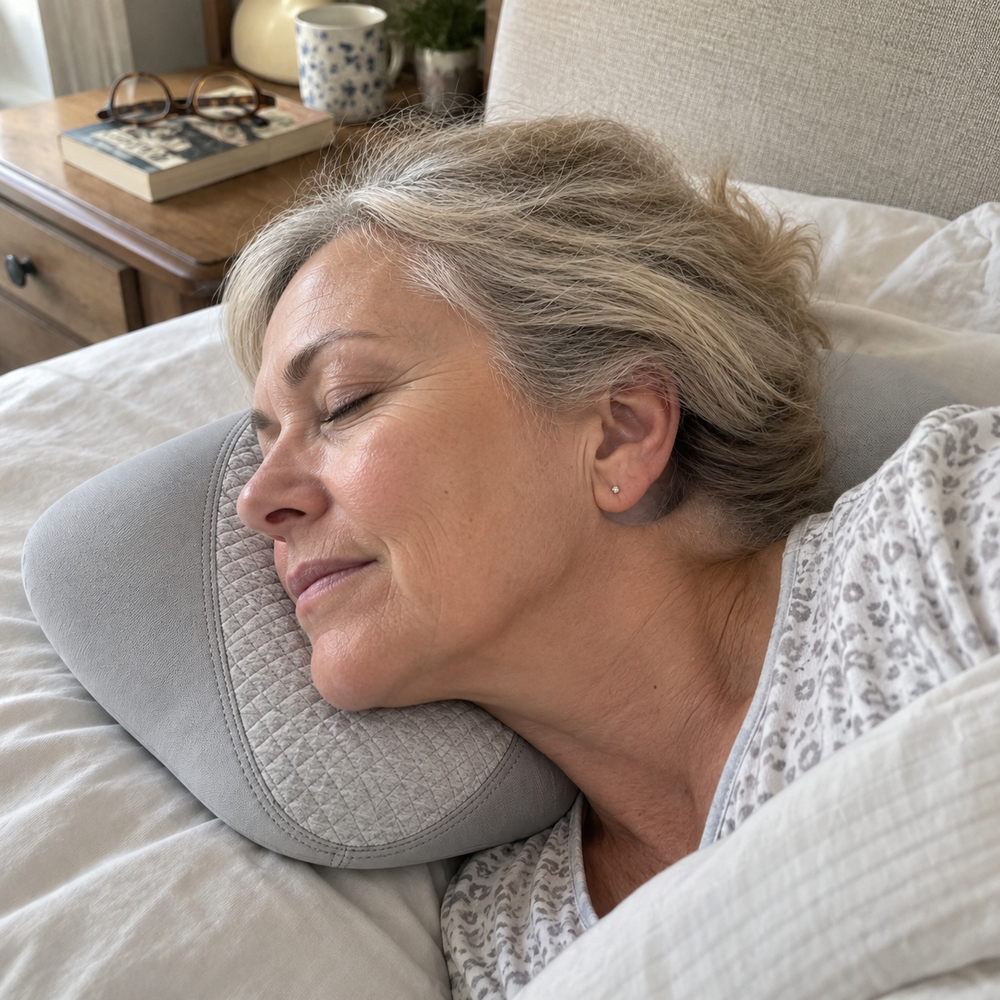
✓ Creates open space so your ear is not pinned directly against the pillow.
✓ Made for side sleepers with piercings, earbuds, CNH or pressure-sensitive ears.
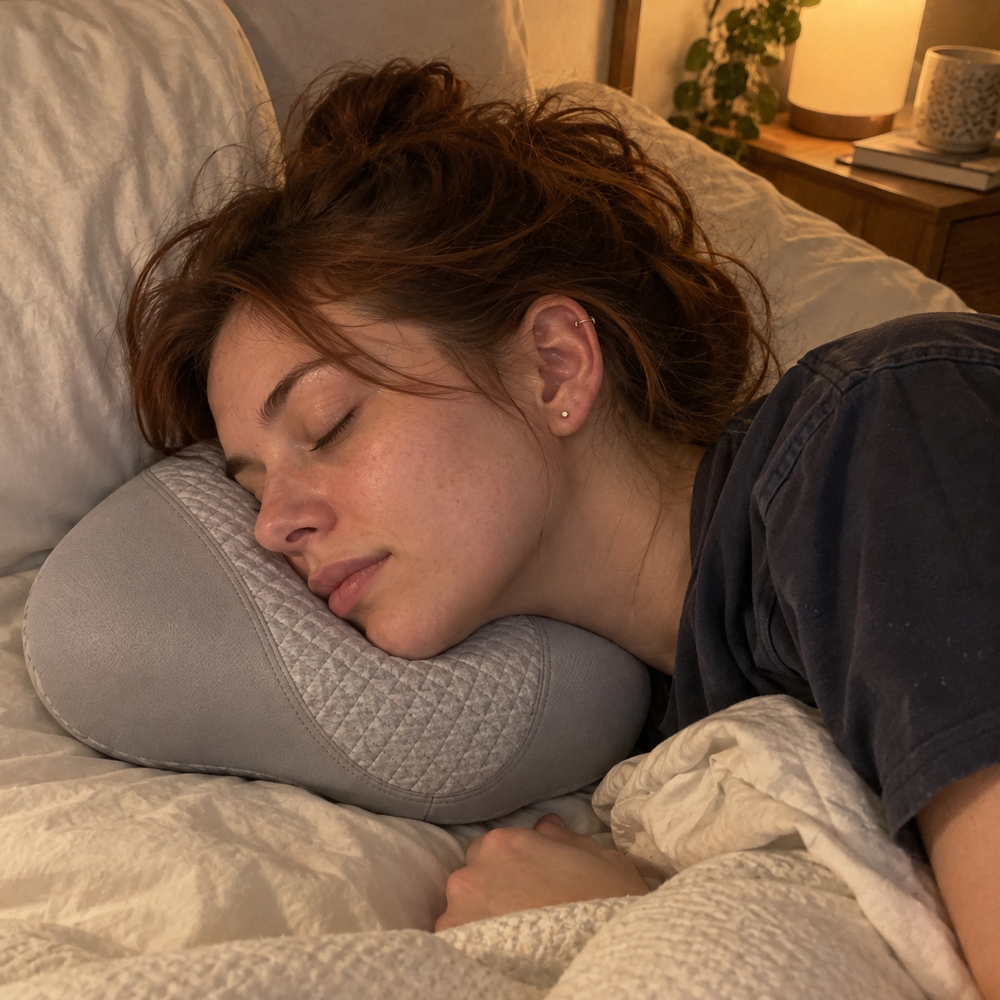
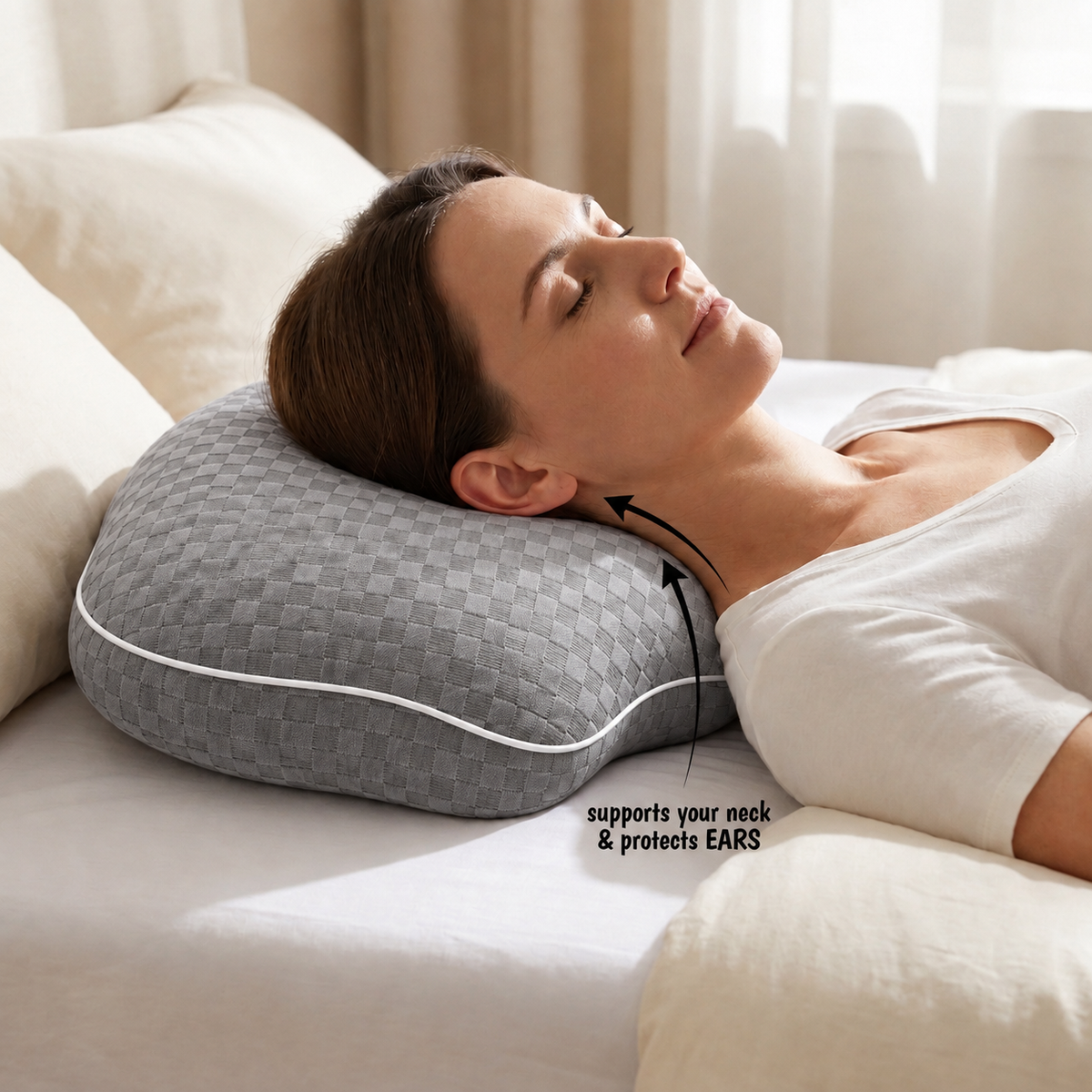
✓ Full-size pillow supports the neck and keeps your ears safe!
✓ Stop switching sides just to protect one sore ear.
Couldn't load pickup availability
EarFloat™ Earbud Sleep Pillow
What's included
What's included
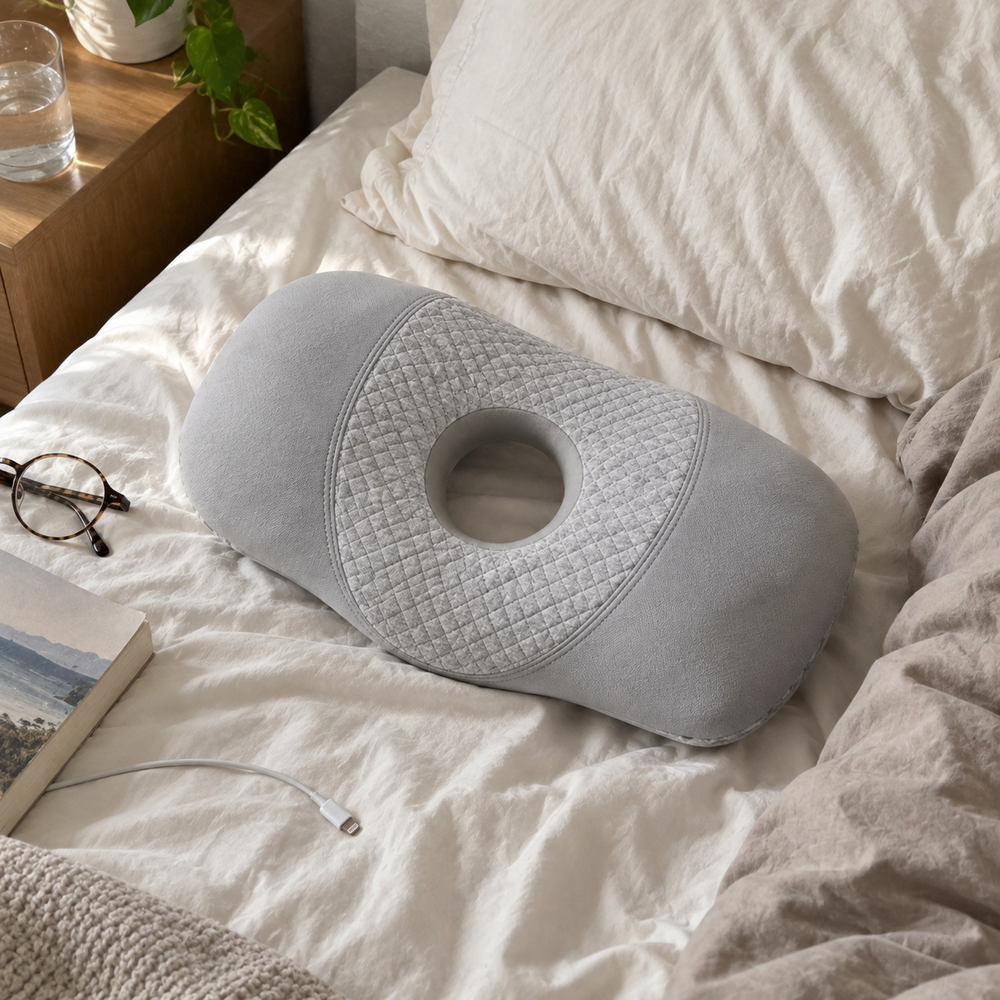
One EarFloat™ full-size side-sleeper pillow with an ear-clearance opening designed to keep direct pillow pressure off the outer ear.
Who is EarFloat™ for?
Who is EarFloat™ for?
Side sleepers who struggle with pillow pressure from fresh or healed ear piercings, earbuds or earplugs, CNH, or other pressure-sensitive outer-ear discomfort.
What does EarFloat™ actually do?
What does EarFloat™ actually do?
EarFloat™ is a comfort product. Its purpose is mechanical: create clearance around the ear while supporting the head and neck around it. It is not a treatment or cure for CNH, TMJ, infection, or any other medical condition.
30-Day Sleep-On-It Guarantee
30-Day Sleep-On-It Guarantee
Try EarFloat™ in your own bed for 30 nights. If it isn't making side sleeping more comfortable for you, contact us within 30 days of delivery and we'll make it right.
Because a pillow is personal, we want you to have enough time to actually sleep on it—not decide after five minutes.
To qualify for a refund, your EarFloat™ must be returned in reasonable condition. Normal use during your 30-day trial is completely fine. Reach out with your order number to infoglaceofficial@mail.com anytime and we will make it right!
Damaged or incorrect order? Contact us within 7 days of delivery and we'll replace it or cover the return at no cost to you.



FOR FRESH & HEALING EAR PIERCINGS
Your New Piercing Shouldn't Cost You Your Favorite Side of the Bed.
Cartilage piercings turn an ordinary pillow into a nightly pressure point. You roll onto your favorite side, your ear gets trapped under the weight of your head, and suddenly sleep becomes a position-management exercise.
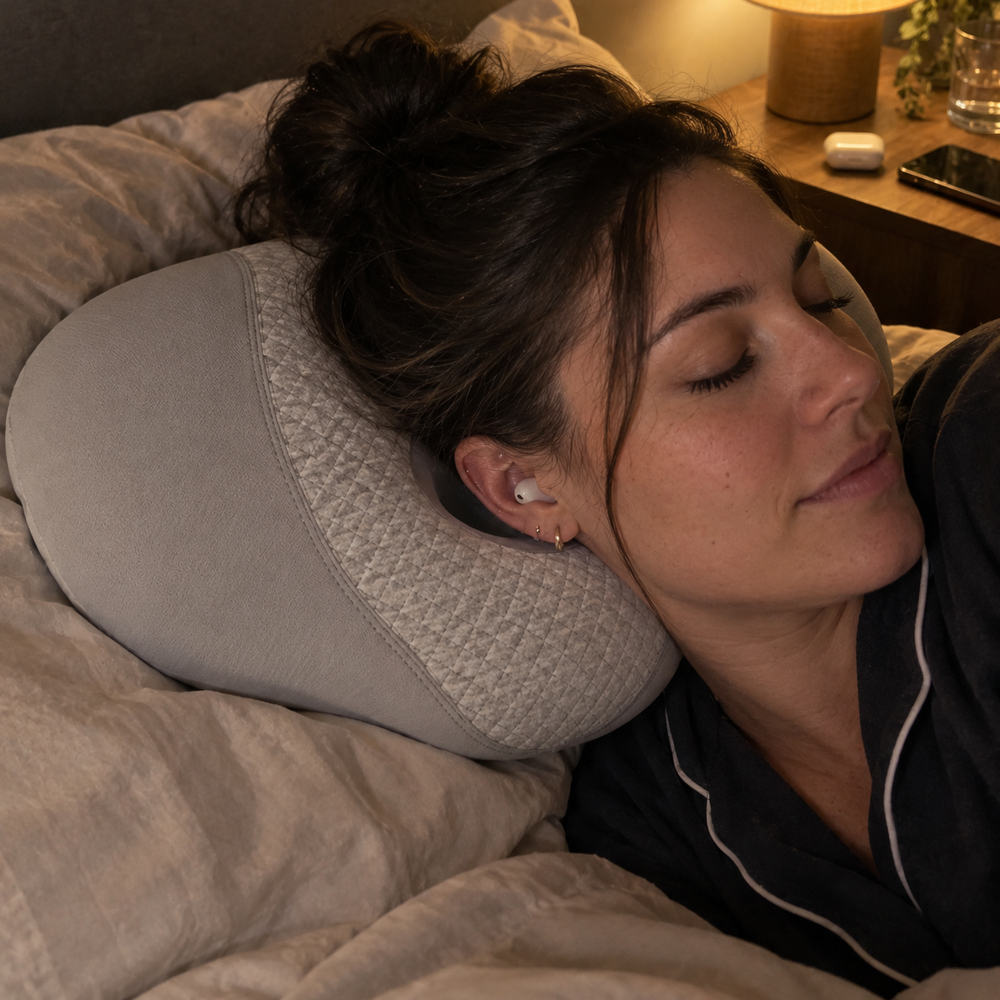
EarFloat™ gives the ear an open clearance zone so jewelry and sensitive cartilage are not pressed directly into the pillow — while the surrounding pillow continues supporting your head and neck.
Different Reasons. Same Pressure Problem.
Your Pillow Keeps Putting Your Ear in the Wrong Place.
A normal pillow asks your ear to carry direct pressure every time you sleep on your side. EarFloat™ changes one thing: instead of putting cushioning under the ear, it puts open space there — and keeps support around it.

FOR PODCAST, ASMR & AUDIO SLEEPERS
Keep the Podcast. Lose the Pillow Pressure.
If sound is how you shut your brain off at night, removing the earbud is not much of a solution. The problem is what happens when you roll onto it.
A standard pillow pushes the bud toward your ear. EarFloat™ gives the ear and earbud open space instead, so you can lie on your side without putting the bud directly between your head and the pillow.
Three Different Reasons Side Sleepers Need Ear Clearance
-

★★★★★

I just wanted to keep listening to my podcast.
Silence keeps me awake, so I sleep with one earbud in. The problem was always rolling onto it. I wanted something that let me keep my nighttime routine without the pillow pressing the bud into my ear.
-

★★★★★
I wasn't giving up side sleeping for a piercing.
I love my cartilage piercings. I do not love spending months trying not to roll onto them. The ear opening is the part that makes sense to me: give the piercing space instead of asking a softer pillow to somehow fix direct pressure.
-

★★★★★
Soft pillows still put pressure on my ear.
I kept buying softer pillows and my outer ear still hurt. What I actually needed was not softer material under the sore spot. I needed nothing touching that spot in the first place.


FOR CNH & PRESSURE-SENSITIVE EARS
When Even a Soft Pillow Hurts, Stop Putting the Ear Under Load.
For CNH and other pressure-sensitive outer-ear problems, the issue is often direct contact. A softer pillow can still press against the same tender spot all night.
EarFloat™ uses the simple pressure-offloading idea behind ear-hole pillows: give the ear open space instead of more material underneath it. The difference is that the rest of the pillow is still there to support your head and neck. EarFloat™ is a comfort product and does not treat or cure CNH.
What Makes EarFloat™ Different?
| EarFloat™ | Standard Pillows | |
|---|---|---|
Open ear-clearance zone |
||
Full-size head & neck support |
||
Room for piercings or earbuds |
||
Pressure relief without a tiny travel donut |
||
Built around side-sleeping comfort |
Why Ear Pressure Is a Growing Sleep Problem
Honest numbers. No inflated claims.
46%
Ear jewelry represents roughly 46–50% of the body-piercing jewelry market — and cartilage piercings can make side sleeping especially uncomfortable while sensitive.
11%
The sleep-headphones market is projected to grow at about 11.4% CAGR from 2026 to 2033 as more people use audio as part of their sleep routine.
12%
TMJ disorders are estimated to affect 5–12% of the population; ear and jaw discomfort are among the reasons some side sleepers become highly sensitive to nighttime pressure.
Different communities. The same nightly pressure problem.
Everything you need to know before your first night
EarFloat™ Questions? Answered.
Who is EarFloat™ designed for?
EarFloat™ is for side sleepers who want direct pressure kept off the outer ear — especially people with ear piercings, earbuds or earplugs, CNH, or pressure-sensitive ears.
Can I sleep with earbuds in it?
The ear-clearance opening is designed to give your ear and earbud space instead of pressing the bud directly into a flat pillow. Saving you from Forcing the earbud into your ear under the weight of your head!
Can I use it with a fresh piercing?
EarFloat™ is designed to give your fresh piercing the space and comfort that it needs to heal naturally while still allowing you to sleep on your side and support your head and neck. You no longe have to choose.
Does EarFloat™ treat CNH or TMJ?
No. EarFloat™ is not a medical treatment. It is a comfort pillow designed to reduce direct outer-ear pressure while side sleeping. If you have persistent ear or jaw pain, seek appropriate medical advice.
Why not just use a travel or donut pillow?
Many improvised donut solutions create ear clearance but sacrifice the feel and support of a normal bed pillow. EarFloat™ is built around the opposite idea: keep the ear opening, keep the full-size pillow and keep the neck support.
What makes the opening matter?
Softness can cushion pressure, but it does not remove contact. An open ear-clearance zone changes the geometry so the outer ear is not directly sandwiched between your head and the pillow.
Sleep on Your Sore Side Again.
Your piercing, earbud or sensitive ear should not decide which side of the bed you are allowed to sleep on. Give your ear somewhere to go.
What Side Sleepers Are Saying
★★★★★ 4.8 out of 5 — Verified Purchases